US govt, UNICEF urges Benue to invest in nutrition as child stunting, anaemia remain high
 admin
Jun 11, 2026 06:01
124
0
admin
Jun 11, 2026 06:01
124
0
By Tolu Temidire
The United Nations Children's Fund (UNICEF) has called on the Benue State Government to increase investment in nutrition programmes and release funds for critical interventions aimed at tackling malnutrition among women and children, warning that poor nutrition continues to undermine the state's human capital development.
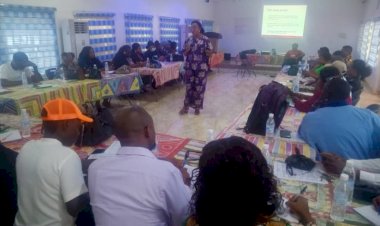
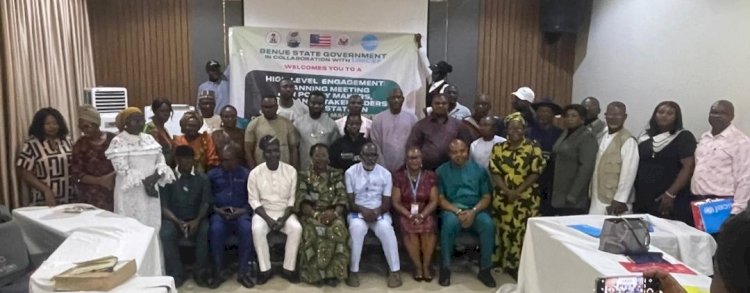
The appeal was made Wednesday in Makurdi during a High-Level Engagement and Planning Meeting for Policy Makers, Local Governments and Stakeholders on the United States Government-funded initiative on Preventing Malnutrition in the First 1,000 Days of Life.
UNICEF Nutrition Specialist, Enugu Field Office, Mrs. Ngozi Onuora, who addressed participants at the meeting, said the programme was designed to address malnutrition during the first 1,000 days of life, a period she described as crucial to a child's physical growth, brain development and future productivity.
She explained that the initiative, funded by the United States Government, aligns with Nigeria's multisectoral plan of action on nutrition and is being implemented in seven states across the country, including Benue.
According to her, Benue and Enugu are the two beneficiary states under the UNICEF Enugu Field Office, while 12 local government areas have been selected across Benue's three senatorial zones for the rollout of the programme.
Mrs. Onuora said despite Benue's status as Nigeria's food basket, the state still faces a serious nutrition crisis. She cited findings from the 2024 Nigeria Demographic and Health Survey (NDHS), which showed that 25.5 percent of children under five years in the state are stunted, indicating chronic malnutrition.
"Benue is the food basket of the nation, but we still have a lot of malnutrition. Twenty-five point five per cent of children are stunted, meaning they are shorter than the expected height for their age because of long-term nutritional deficiencies," she said.
She further disclosed that only 6.4 percent of children in Benue receive the minimum acceptable diet, a global indicator used to measure adequate feeding practices among children.
According to her, the low figure suggests that many children are not consuming foods from the recommended food groups needed for healthy growth and development.
"There is food, but because of factors such as poverty, lack of awareness and poor dietary diversity, many children are not receiving the nutrition they need," she added.
Mrs. Onuora stressed that the programme seeks to improve nutrition outcomes through dietary diversification and the provision of specialised nutrition commodities, including Small Quantity Lipid-Based Nutrient Supplements (SQLNS), Ready-to-Use Therapeutic Food (RUTF) and Multiple Micronutrient Supplements (MMS) for pregnant women.
She noted that UNICEF would match contributions made by the Benue State Government through the Child Nutrition Fund to support the procurement of the commodities.
The UNICEF official, however, maintained that ownership and sustainability of the programme must come from the state government.
"We are asking the Benue State Government to own this programme. UNICEF and the US Government can provide technical support, but sustainability can only be achieved when government commits resources and drives implementation," she said.
She also urged the state government to create dedicated nutrition budgets across relevant ministries and agencies and ensure timely release of approved funds.
The nutrition expert raised further concern over findings from a recent nutrition screening exercise conducted among displaced persons and host communities in one of the state's local government areas.
According to her, out of 127 children screened, only 26 per cent were found to have normal nutritional status, while 46 per cent were suffering from Severe Acute Malnutrition (SAM).
"These figures are alarming and show the urgent need for intervention. Without investment in nutrition commodities and treatment services, many vulnerable children may not receive the support they need," she warned.
Mrs. Onuora also highlighted the burden of anaemia in the state, revealing that 56 per cent of pregnant women and 61 per cent of children under five are anaemic.
She explained that the SQLNS supplements contain 22 micronutrients that help prevent anaemia and other nutrient deficiencies among children, while MMS improves the nutritional health of pregnant women.
Responding, the Benue State Commissioner for Health and Human Services, Dr. Paul Ogwuche, assured UNICEF and development partners of the state government's commitment to the programme.
He said Governor Hyacinth Alia had prioritised healthcare delivery since assuming office and would continue to support interventions aimed at improving the wellbeing of residents.
"We are grateful to the United States Government and UNICEF for bringing this initiative to Benue State. The government is committed to partnering with all stakeholders to ensure that the programme succeeds and that our children are protected from malnutrition," he said.
On concerns that previous administrations had not sufficiently invested in nutrition programmes, Dr. Ogwuche said the current government was pursuing reforms across key sectors and would provide the required support.
"What we used to know is no longer happening. The Governor is committed to this initiative and the necessary support will be provided," he added.
Also speaking, the Director-General of the Benue State Budget and Economic Planning Commission, Prof. Jerome Andohol, said tackling malnutrition requires coordinated efforts across sectors such as health, education, agriculture, social protection and water, sanitation and hygiene.
He disclosed that the state planned to strengthen budgetary provisions for nutrition and improve monitoring mechanisms to ensure funds are properly utilised.
"We will work towards ensuring that nutrition-related activities are captured in sectoral budgets and that local governments also contribute to the Child Nutrition Fund. This will enable us leverage the matching support provided through UNICEF and the US Government-funded programme," he said.
The Commissioner for Education and Knowledge Management, Dr. Margaret Adamu, described nutrition as a key factor in educational performance and child development.
"A malnourished child cannot effectively learn. Investing in nutrition is not only about health; it is also about improving learning outcomes and building a productive future generation," she said.
She advocated increased nutrition education and public awareness campaigns, stressing the importance of teaching families how to make use of locally available foods to provide balanced diets for children.
The meeting brought together commissioners, local government chairmen, development partners and other stakeholders to align strategies, define responsibilities and mobilise support for the implementation of the nutrition programme across the selected local government areas.
Stakeholders agreed that increased funding, stronger political commitment and sustained multi-sectoral collaboration would be crucial to reducing malnutrition and improving the health and wellbeing of women and children in Benue State.