NITP at 27th MCPDP pushes digital shift, global standards to tackle urban challenges, insecurity s
 admin
Apr 4, 2026 12:35
516
0
admin
Apr 4, 2026 12:35
516
0

By James Ike
The Nigerian Institute of Town Planners (NITP) has intensified efforts to align Nigeria’s urban planning system with global standards, describing the move as vital to addressing insecurity, strengthening infrastructure, and promoting sustainable development.

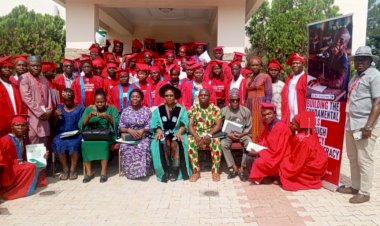
A statement by the National Public Relations Secretary of the NITP, Dr. Chiahemba Nor disclosed that the position was reinforced at a stakeholders’ consultation and town hall meeting in Kaduna, where the National President of NITP, Dr. Ogbonna Chime, called for deeper collaboration among professionals, government institutions, and citizens.
Represented by the Institute’s Secretary, Dr. Mohammed Zayanu, Chime stressed that embracing international best practices would transform Nigeria’s urban landscape.
“Adopting global best practices in urban planning will significantly enhance safety, improve infrastructure, and support long-term economic growth,” he said.
He also highlighted the importance of inclusive participation, noting that “effective community sensitisation and strong collaboration between citizens, government institutions, and professionals are critical to achieving these goals.”
The Director General of the Kaduna State Urban Planning and Development Agency, Mallam Abdulrahman Yahaya, cautioned that poor coordination among planners continues to undermine development outcomes.
“Harmony among town planners is critical to achieving effective planning and successful execution of development projects,” Yahaya stated.
He added that fragmented planning contributes to insecurity and weak service delivery, particularly in rapidly expanding cities.
Earlier, the Kaduna State Chairman of NITP, Dr. Yakubu Aliyu Bununu, urged practitioners to prioritise continuous professional development to remain relevant in a rapidly evolving global environment.
He described Kaduna as privileged to host the programme and encouraged participants to maximise the opportunity to sharpen their skills.
The town hall, with the theme “Working Together for Accomplishment,” emphasised people-centred planning and stronger partnerships between government and citizens.
Participants from various sectors shared practical insights on the impact of urban planning on daily life, raising concerns about existing practices while proposing innovative solutions.
Organisers expressed optimism that the engagement would promote more inclusive, responsive, and effective planning systems across the country.
Meanwhile, the Kaduna State Government has announced plans to overhaul its urban planning framework by transitioning from an analogue system to a fully digital model.
The Permanent Secretary, Ministry of Housing and Urban Development, Mallam Shehu Usman, disclosed this during the 27th Mandatory Continuing Professional Development Programme organised by NITP in collaboration with the Town Planners Registration Council of Nigeria (TOPREC).
Describing the move as a strategic response to rapid urbanisation, Usman said: “This initiative is designed to address the growing challenges associated with rapid urbanisation while aligning our planning processes with global best practices. Digitalisation is no longer optional, it is a global trend Kaduna State cannot afford to ignore.”
He commended professional bodies for driving digital transformation and assured continued government support to strengthen policy frameworks and urban governance.
Also speaking, the National President of NITP, represented by the First National Vice President, Prof. Kingsley Ogboi, said the programme offers a critical platform for improving professional capacity and regulatory compliance, especially in the application of modern technologies.
“Global planning practices are increasingly driven by innovations such as geospatial technologies, artificial intelligence, and data-based decision-making. Nigeria must embrace these tools to remain competitive and effective,” he said.
In his remarks, TOPREC President, Isyaku Muhtar Kura, highlighted the combined pressures of population growth and climate change, stressing the urgency of innovation.
“The adoption of modern technologies, including artificial intelligence in land-use analysis, is essential for proactive and efficient urban planning across the country,” he said.
Stakeholders expressed optimism that the combined push for global standards and digital transformation would reposition Nigeria’s urban planning sector to better address security concerns, infrastructure deficits, and sustainable development goals.
As the event concluded on April 2, 2026, Chairman of the MCPDP Committee, Dr. Osunsanmi Gbolabo, urged participants to translate insights into action.
“As we wrap up the Kaduna leg of the 2026 MCPDP, let this be a launchpad, not a conclusion. The knowledge we’ve gained, the networks we’ve built, and the digital tools we’ve embraced must now drive real impact,” he emphasised.
“Whether digitising planning approvals, applying AI in geodesign, or training the next generation of planners, I urge you to act with boldness and creativity. Together, let’s shape smarter, more resilient cities, sustainable environments, and thriving economies across Nigeria,” he added.