Environmental cleanup takes centre stage as S4C convenes NED2026
 admin
Sep 15, 2026 11:59
27
0
admin
Sep 15, 2026 11:59
27
0
By Benedjcts Aboh
Spaces for Change, S4C, in partnership with the Nigeria Extractive Industries Transparency Initiative, NEITI, and the National Oil Spill Detection and Response Agency, NOSDRA, with support from the Ford Foundation, is convening the fifth edition of the National Extractives Dialogue, NED2026, in Port Harcourt, Rivers State.
The two-day dialogue, scheduled for September 29 and 30, 2026, will focus on the theme, “Remediation Before Divestment and Energy Transition: Amplifying the Bille Environmental Crisis.”
According to S4C, the event will bring together more than 150 stakeholders from the Niger Delta and beyond, including government officials, regulators, civil society organisations, host community representatives, academics and private-sector actors, for what it described as a high-level, solutions-driven conversation on the future of extractive governance in Nigeria.
The organisation, in a statement signed by its Executive Director, Victoria Ibezim-Ohaeri, said the Dialogue was coming at a time the Nigerian extractive sector was undergoing a major structural transformation, particularly with accelerated divestment of onshore assets by International Oil Companies, IOCs, and the country's push towards energy transition.
It, however, expressed concern that the transition was taking place against the backdrop of unresolved environmental challenges in several oil-producing communities across the Niger Delta.
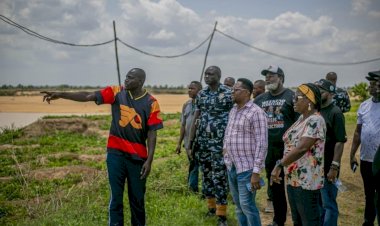
S4C said Bille Kingdom in Degema Local Government Area of Rivers State, which hosts major oil asset blocks, including Oil Mining Leases, OMLs, 18 and 24, was at the centre of the environmental concerns that would be examined at the Dialogue.
The statement said, “Reports from affected communities and preliminary field observations indicate persistent environmental challenges, including reported gas leaks impacting local waterways, creeks, residential areas, and agricultural livelihoods.”
It noted that while technical assessments were ongoing, residents of Bille were awaiting the outcome of verified scientific investigations as well as immediate relief measures, particularly access to clean water.
“Effective resolution requires comprehensive technical source-tracing, inter-agency collaboration, and corporate accountability across operating entities,” S4C stated.
The organisation stressed that the ongoing divestment of onshore assets by IOCs and Nigeria's energy transition agenda must not result in the transfer of historical environmental liabilities to host communities.
It said, “As Nigeria joins countries across the globe to clamour for energy transition while IOCs transfer onshore assets to domestic operators, concrete steps must be taken to ensure that historical environmental liabilities and remediation obligations are addressed.”
According to S4C, the NED2026 would proceed on the premise that environmental responsibilities should be properly dealt with before the transfer of extractive assets.
“To ensure divestments do not leave communities bearing the burdens of extractive activities, NED 2026 proceeds upon the premise that responsible decommissioning, environmental cleanup, and inter-agency coordination must precede asset transfers and energy transition plans,” it said.
The organisation explained that the National Extractives Dialogue had, since its inception, provided a platform for examining the challenges confronting extractive governance in Nigeria and the wider West African region.
“Since its inception, the National Extractives Dialogue has served as a constructive platform for spotlighting the complex realities in extractive governance in Nigeria and the broader West African region,” the statement said.
S4C added that previous editions of the Dialogue had “inspired community-led action, catalysed regulatory reforms, amplified marginalized voices, and deepened public discourse on accountability in the extractive sector.”
It said the 2026 edition would build on that legacy by moving beyond the identification of problems to developing practical approaches to addressing them.
“NED2025 builds on this legacy by not only raising urgent questions but also offering concrete strategies for reform,” the organisation stated.
The Dialogue, according to S4C, would also adopt a grassroots community conference format to ensure that people directly affected by extractive activities have an opportunity to engage those responsible for regulation and operations in the sector.
It said, “The Dialogue is structured as a grassroots community conference, enabling community members from Bille and neighbouring riverine areas to engage directly with regulators, industry operators, security agencies, and civil society to demand transparency and enforce corporate and state responsibility.”
S4C said the gathering would therefore provide an avenue for stakeholders to deliberate on the Bille environmental concerns while examining broader questions around environmental remediation, corporate accountability, asset divestment, responsible decommissioning and Nigeria's energy transition.
The organisation maintained that meaningful progress in the extractive sector would require stronger coordination among relevant government agencies, regulators, companies, civil society groups and affected communities.
It said the NED2026 would seek to strengthen that engagement and generate practical strategies capable of protecting host communities from inheriting unresolved environmental liabilities as ownership and operations of onshore assets change hands.