CAPPA appoints Rafsanjani as Advisory Board Chairman, warns against emerging “Green Mineral” crisis
 admin
Nov 3, 2025 11:43
103
0
admin
Nov 3, 2025 11:43
103
0

CAPPA appoints Rafsanjani as Advisory Board Chairman, warns against emerging “Green Mineral” crisis
By Ade Ade
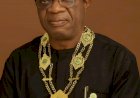
The Corporate Accountability and Public Participation Africa (CAPPA) has announced prominent Nigerian civil rights advocate, Auwal Musa Rafsanjani, as the new Chairman of its Advisory Board, following an election conducted over the weekend.
In a statement signed by its Executive Director, Akinbode Oluwafemi, the organisation described Rafsanjani’s emergence as a renewed mandate to strengthen its defence of public resources, community rights, and democratic space across Nigeria and the African continent.
Rafsanjani, a leading voice in regional civil society engagement, currently serves as the Executive Director of the Civil Society Legislative Advocacy Centre (CISLAC) and heads Transparency International in Nigeria. He also chairs the Board of Trustees of Amnesty International Nigeria, leads the Zero Corruption Coalition, and co-convenes the Say No Campaign.
With over three decades of active advocacy, his work has spanned global and regional platforms, including a stint as the Sub-Saharan Africa representative on the Coordination Committee of the UN Convention Against Corruption (UNCAC) Civil Society Coalition. He is also a founding member of the Transition Monitoring Group (TMG).
CAPPA expressed confidence that his experience in anti-corruption reforms, extractive transparency, human rights, and legislative advocacy will strengthen its campaigns across Africa. The organisation noted that his leadership comes at a time when civic space is shrinking, public resources are being commercialised, and communities face combined threats of economic exclusion and environmental harm.
The newly constituted Advisory Board also includes Akinbode Oluwafemi (Executive Director/Secretary), Evelyn Nkanga Bassey (Treasurer), Scott Pegg, Kayode Ogunbunmi, Betty Abah, and Doifie Buokoribo.
Speaking after his election, Rafsanjani pledged to firmly position CAPPA as a fearless watchdog of public interest, stressing that its work in public health, extractive justice, environmental protection, democratic rights, and defence of public services will receive stronger institutional backing and clearer strategic direction.
The board used the occasion to raise fresh concerns over developments in Nigeria’s mining sector, warning that the global hunt for lithium and other critical minerals required for renewable energy and digital technologies is driving aggressive commercial exploration in host communities.
While acknowledging government claims that the sector’s contribution to national GDP has risen to 4.6 per cent from less than 0.5 per cent a decade ago, it cautioned that this growth is unfolding alongside land grabs, forced displacement, environmental degradation, and concession-style politics.
The board warned that Nigeria risks repeating the Niger Delta experience, where massive oil revenues came at the cost of destroyed ecosystems and damaged livelihoods.
It insisted that meaningful regulation, transparent governance, and guaranteed community consent are necessary to avoid a new resource curse, adding that “there is no just transition if communities do not share its gains.”
CAPPA called for a people-centred resource framework that treats land, water, culture, and livelihoods as integral to development rather than collateral for investment, urging citizens to challenge models that enrich a few at the expense of many.
Reaffirming its continental commitment, the organisation vowed to deepen alliances with labour unions, grassroots movements, youth formations, community defenders, and women’s groups, stressing that the struggle for public accountability “cannot be won by scattered voices.”