How popular food vendor and social media personality, aunty Esther died after cancer battle and rejecting transfusion
 admin
Dec 29, 2025 12:56
150
0
admin
Dec 29, 2025 12:56
150
0
By Johnson Arua
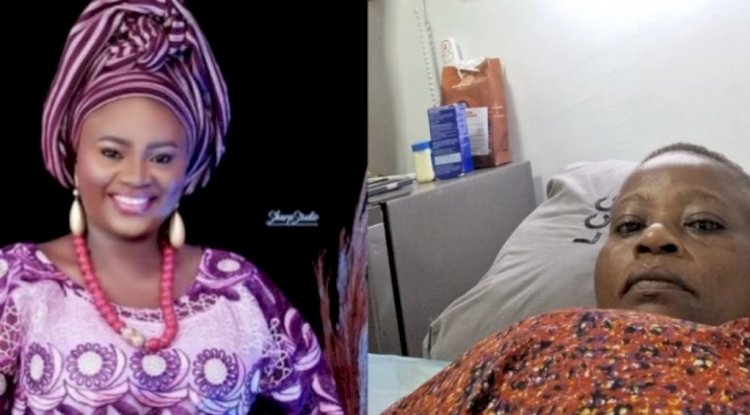
Mensah Omolola, widely known on X as Aunty Esther, has passed away, months after her health struggles and medical choices captured nationwide attention online.
Her death was confirmed on Saturday by media personality #AUNTYMUSE_, who had supported her throughout her cancer treatment journey.
Responding to the news, #AUNTYMUSE_ wrote, “May her soul rest in peace,” confirming the sad development.
Aunty Esther first gained widespread attention after publicly refusing a blood transfusion recommended by doctors as part of her cancer treatment, citing her religious beliefs as a Jehovah’s Witness.
The decision sparked heated debate and divided opinions across Nigeria.
Following public appeals, a fundraising campaign coordinated primarily by charity advocate Wisdom Obi-Dickson, also known as #Wizarab10, reportedly raised about ₦30.7 million by December 1, 2025, to support her treatment.
In updates shared on her X account, Aunty Esther revealed that medical tests initially showed her cancer was confined to her breast and armpit. She explained that while doctors planned to begin chemotherapy, her blood levels had to improve before treatment could proceed.
She wrote, “We opted for medical options that would increase my blood count without transfusion,” expressing gratitude to Nigerians who had supported her journey.
The situation became more controversial when Obi-Dickson claimed that Aunty Esther’s church had warned her of possible disciplinary measures, including disfellowship, if she accepted a transfusion.
He noted that doctors presented two treatment paths: one involving transfusion, which was faster and more affordable, and another avoiding it but requiring more time and resources. “In line with her faith, she chose the latter,” he said.
While he initially emphasized that her religious beliefs should be respected, he later expressed frustration, stating that despite repeated medical advice, Aunty Esther, her family, and church leaders maintained a firm stance against transfusion.
Reactions to her passing have emerged online, with social media user @ourfavonlinedoc attributing her death to religious extremism. He argued that her condition was treatable had standard medical care been fully embraced earlier, writing that delays caused by alternative remedies and the refusal of a blood transfusion “worsened her condition, making her death avoidable and tragic.”
Aunty Esther’s passing marks the end of a story that highlighted the complex intersection of faith, medicine, and public discourse in Nigeria, leaving a community of supporters and critics alike reflecting on her life and choices.