CDD trains reporters to track election security threats in Benue, Plateau states
 admin
Oct 2, 2026 12:08
15
0
admin
Oct 2, 2026 12:08
15
0

By Angel Ene
The Centre for Democracy and Development, CDD West Africa, has commenced the training of Election Security Threat Reporters in Benue and Plateau states as part of efforts to strengthen early warning and response mechanisms ahead of the 2027 general elections.
The exercise, supported by the Foreign, Commonwealth and Development Office, FCDO, through the SPRiNG programme, is being implemented under the Election Security and Resilience Project.
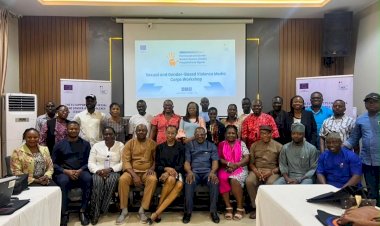
The training which held in Jos, Plateau State, brought together selected participants from the two states and focused on identifying, documenting and reporting emerging security threats, misinformation, disinformation and hate speech capable of heightening tensions and triggering electoral violence.
Speaking during the engagement, Research Analyst at CDD, Dengiyefa Angalapu, said the initiative was designed to establish an early warning mechanism that would enable relevant stakeholders to receive information on emerging threats before they escalate.
Angalapu said: “We are gathered here to train our Election Security Threat Reporters. We have noticed that leading to the election, there is an upsurge in issues of violence, conflict and hate speech.

“We want to be able to proactively report these issues and also engage critical stakeholders on these issues, especially on proactive measures to deal with the issues before they become violent.
“So what we intend to do is to create an early warning platform that we can use to engage critical election-related stakeholders.”
He said the initiative was informed by recurring patterns of violence around election periods in Nigeria, stressing that timely documentation of conflicts could facilitate early intervention by relevant authorities and stakeholders.
“If you have studied Nigerian election history, every year before the election or the election year, you usually see a very big upsurge in violence,” he said.
Angalapu cited data from the Armed Conflict Location & Event Data Project, ACLED, which, according to him, showed that the period between June and the later part of the year had recorded significant levels of conflict in Nigeria.
He said: “So every election year that we have seen dramatic increase in violence. We have traditional issues of violence in Nigeria.
“However, what is important is to quickly record these conflicts, record issues of violence, and ensure that before they become destructive, we ensure that the stakeholders responsible for dealing with those issues easily get the information and act on it.”

According to him, the project would provide an intelligence platform for identifying election-related threats before they develop into full-scale violent situations.
He expressed the hope that the initiative would contribute to a peaceful and credible 2027 electoral process.
“That’s the motivation for us, to ensure that we have a 2027 election that is peaceful, credible, and violent-free,” Angalapu said.
He disclosed that CDD would train four Election Security Threat Reporters in each selected state across the North-West and North-Central zones.
According to him, three of the reporters would be deployed to cover the three senatorial districts in each state, while the fourth would coordinate the team.
“Across the Northwest and the North Central, we are training four election security reporters per state. So we intend to deploy one to each senatorial district, making it the three senatorial districts that we have in all of the states.
“Then we will have one person that will lead the team, making it four persons. So you have four in Katsina, you have four in Kaduna, you have four in Plateau, and then four in Benue in total,” he said.
Angalapu added that the CDD was also leveraging existing Community Dialogue Committees to strengthen grassroots conflict prevention and resolution.
He said the committees would not only report emerging conflicts but would deploy their conflict-resolution skills to address disputes before they escalate.

“Because we had established Community Dialogue Committees, we are also training them, and hope that we will utilise their abilities of conflict resolution to not just report conflict in these instances, but when the conflict data are being reported, they can also act on it and do what they can at the grassroots level to ensure that most of the conflicts are resolved even before it gets to a very sophisticated level,” he said.
He disclosed that more than 28 participants were undergoing the training, comprising 16 Election Security Threat Reporters, fact-checkers and members of Community Dialogue Committees.
“The whole idea is to ensure that we deal with issues of election security and nip it in the bud before it becomes valid,” Angalapu said.
The training also featured sessions on fact-checking, verification of misinformation and disinformation, identification of hate speech, recognition of conflict incidents and actors, conflict-data collection and conflict-sensitive reporting.
A Programme Staff of CDD, Ahmad Aluko, facilitated sessions on verifying misinformation, disinformation and hate speech, while Angalapu handled sessions on identifying, documenting and safely reporting election security threats and the use of the Election Security Threats Reporting Form.