Tinubu orders arrest of fake agency promoter, suspends three PSs
 admin
Aug 21, 2026 10:43
34
0
admin
Aug 21, 2026 10:43
34
0
By Johnson Arua
President Bola Ahmed Tinubu has ordered the immediate arrest of a suspected promoter of a fictitious Federal Government agency and approved the suspension of three permanent secretaries over their alleged links to the development.
The directive followed fresh findings by the Independent Corrupt Practices and Other Related Offences Commission (ICPC) in its investigation into fictitious government agencies and loopholes in the Federal Government’s administrative processes.
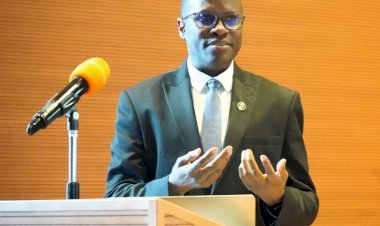
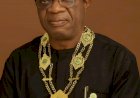
The ICPC Chairman, Dr Musa Adamu Aliyu, disclosed this on Friday after briefing the President on the commission’s latest findings concerning the alleged National Brands Development and Made-in-Nigeria Special Project Office.
According to Aliyu, the purported agency allegedly secured office accommodation within the premises of the Office of the Secretary to the Government of the Federation (OSGF) without presidential authorisation.
The ICPC chairman identified the alleged promoter as Prince George Buchi Nwabueze, who he said operated under different variations of his name, including George Nathan Nwabueze, Honourable George Buchi Nwabueze and George Buchi Nwabueze.
Aliyu said President Tinubu, after receiving a comprehensive briefing, directed the immediate arrest of Nwabueze and the suspension of three permanent secretaries pending further investigation.
The affected officials were identified as M.S. Danjuma, Engr. Nadungu Gagare and Richard Pheelangwah.
He said the commission would investigate the roles, if any, played by the suspended officials and other individuals in the creation, accommodation and operation of the purported agency.
The ICPC is also examining how an organisation allegedly operating without presidential approval was able to secure accommodation within government premises and function in an environment capable of giving it an appearance of official legitimacy.
“I have briefed Mr President comprehensively on these new developments. ICPC will continue with its investigation,” Aliyu said.
The latest discovery followed the commission’s investigation into the fictitious Presidential Foreign Intervention Promotion Council (PFIPC), which emerged in July and was subsequently disowned by the Presidency.
The Presidency had warned Nigerians and the international community that the PFIPC had no connection with the Federal Government and was neither created nor authorised by President Tinubu.
The organisation had reportedly paraded individuals as officials of the purported council and used titles and structures allegedly designed to create an impression of presidential authority.
Following the development, Tinubu directed the ICPC to investigate the promoters of the organisation, determine how it operated and establish whether serving or former government officials facilitated its activities.
The President also ordered a broader review of the administrative processes governing the establishment and operation of Ministries, Departments and Agencies (MDAs) and other government institutions.
The wider probe, according to the ICPC, exposed the alleged National Brands Development and Made-in-Nigeria Special Project Office, raising fresh concerns over weaknesses in government processes that could be exploited by unauthorised individuals.
Aliyu said the latest discovery underscored the need for stronger administrative controls and closer scrutiny of government institutions and internal procedures.
He commended Tinubu for ordering a policy audit of MDAs and internal government processes, describing the move as necessary to strengthen governance and prevent abuse of the public service system.
The ICPC is expected to determine how the purported office obtained access to OSGF facilities, who approved or facilitated the arrangement and whether other public officials were involved.
The commission said investigations would continue to uncover those behind the alleged fictitious agencies and identify administrative lapses or possible complicity that may have enabled them to operate as though they were legitimate government establishments.