Peter Obi blames leadership failure as Nigeria trails India in global economic rankings
 admin
Jan 6, 2026 02:01
155
0
admin
Jan 6, 2026 02:01
155
0

By Johnson Arua
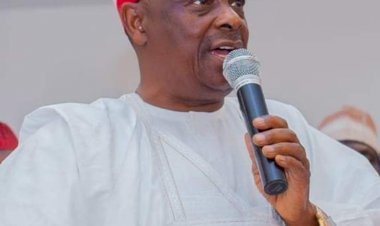
Former Anambra State Governor and ADC chieftain, Peter Obi, has attributed Nigeria’s prolonged economic decline to poor leadership rather than a shortage of resources, warning that the country has fallen significantly behind global peers such as India.
Obi made the assertion in a statement issued on Monday, reacting to the International Monetary Fund (IMF) estimates for 2025, which show India overtaking Japan to become the world’s fourth-largest economy by nominal Gross Domestic Product (GDP).
According to the IMF, India’s GDP is projected at approximately $4.187 trillion, marginally higher than Japan’s $4.186 trillion, with India now poised to challenge Germany for third place globally.
Drawing a historical comparison, Obi noted that Nigeria once outperformed India on key economic indicators.
He cited World Bank data indicating that Nigeria’s nominal GDP per capita surpassed India’s in both 2007 and 2015, before the trend reversed sharply in subsequent years.
IMF World Economic Outlook projections, he said, show India’s nominal GDP per capita rising to about $2,878 by 2025, while Nigeria’s is expected to fall to roughly $807, despite the country’s abundant natural and fiscal resources.
According to Obi, Nigeria’s predicament is rooted in misplaced priorities and ineffective leadership. He observed that despite significant subsidy savings, increased government revenues and heavy borrowing, exceeding that of all previous administrations combined between 1999 and 2023, economic outcomes remain disappointing.
He further disclosed that combined government revenue between 2023 and 2025 is estimated at about ₦200 trillion (approximately $135 billion), yet critical sectors such as healthcare, education and poverty reduction have recorded no meaningful improvement.
Obi also highlighted the deteriorating living conditions faced by ordinary Nigerians, noting that rising costs and infrastructural challenges continue to strain households and businesses.
“Small and medium-sized enterprises are shutting down daily due to lack of support, electricity supply remains unreliable and costly, and the prices of basic necessities, including food, transport and rent, are increasingly beyond the reach of most Nigerians,” he said.
Calling for urgent national action, Obi advocated a leadership consensus founded on competence, compassion and character, with a renewed focus on citizens’ welfare and strategic investment in healthcare, education, infrastructure, agriculture and technology.
He stressed the need to cut waste, reduce the cost of governance, and ensure transparency and accountability to enable Nigerians to monitor national progress.
Obi concluded that only through collective action, visionary leadership and responsible governance can Nigeria bridge the widening gap with countries like India and convert its vast resources into shared prosperity, security and opportunity for its citizens.