Benue charts path to sustainable development through Social Register Reform
 admin
Apr 13, 2026 07:58
150
0
admin
Apr 13, 2026 07:58
150
0
By Tosin Asemota
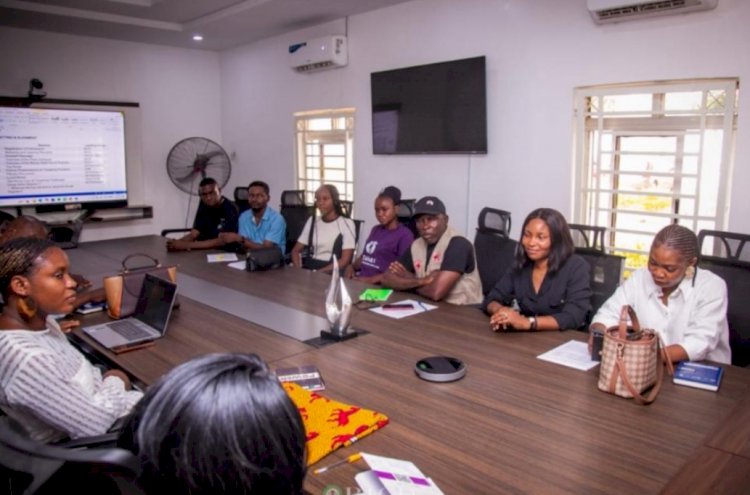
Stakeholders in Benue State have renewed calls for stronger collaboration, improved data management, and inclusive systems to enhance sustainable development, following a two-day policy dialogue on the effective use of the State Social Register.
The high-level meeting, organized by the Bureau for International Cooperation and Development (BICD) in partnership with the Centre for Redefining Alternative Civic Engagement for Africa (RACE) and the Gender and Environmental Risk Reduction Initiative (GERI), with support from the Embassy of France, centered on integrating Internally Displaced Persons (IDPs) into the Social Register as a pathway to long-term resilience and economic inclusion.

In his opening remarks, Director General of BICD, Dr. Aondoaseer Leonard Viashima, underscored the importance of the register in governance and development planning.
“The Social Register is fundamental to transparency and accountability. Its effective use will enable government to better identify and support vulnerable populations while strengthening coordination across sectors,” he stated.
Development partners at the meeting emphasized the need for robust data systems to improve service delivery.
The Executive Secretary of the Benue State Health Insurance Agency (BENSHIA), Prof. Kenneth Kove, pointed to ongoing efforts to widen healthcare access.
“More than 200 people have already been enrolled in Yelewata, and plans are underway to scale up significantly. Accurate data from the Social Register is critical to achieving this,” he said.
Providing an update on data coverage, the State Coordinating Unit (SOCU) representative, Mr. Orduen Angula, revealed that close to 500,000 households across the 23 Local Government Areas have been captured. He, however, noted key challenges.
“Issues such as duplication, limited access, and inconsistencies in data entry, largely driven by displacement, continue to affect the system’s efficiency,” he explained.

The Benue State Emergency Management Agency (BSEMA), represented by Dr. Donald Komgbenda, highlighted the difficulty of capturing displaced persons, especially those residing in host communities.
“Gaps in coordination and reluctance among stakeholders to share data are limiting our ability to fully include displaced populations,” he said.
The dialogue also spotlighted efforts to transition from short-term humanitarian responses to sustainable development systems.
RACE and GERI were recognized for their work under the POWER Project, which supports vulnerable groups, particularly women in the TAHAV Cooperative, by linking them to social protection schemes and economic opportunities.
Representatives of the organizations stressed the urgency of prioritizing women and girls in displacement settings.
“Inclusion of women and girls in IDP camps must be deliberate, as they face heightened vulnerabilities and need structured support systems,” they noted.
Participants further recommended the adoption of biometric technology, frequent data updates, and stronger institutional frameworks to enhance the reliability of the register.
The World Health Organization (WHO) and other partners also called for faster policy implementation and deeper stakeholder engagement.
The meeting concluded with a shared commitment to strengthen coordination, improve data sharing, and institutionalize systems that support inclusive development.

According to Benjamin Yager, the dialogue signals a turning point in Benue’s social protection strategy.
“It reflects a clear move toward a coordinated, data-driven system that can deliver lasting impact for vulnerable populations,” he said.
For groups like the TAHAV Women Cooperative, the outcome represents a shift toward long-term economic empowerment, reduced dependency on aid, and greater integration into formal development structures.