Healing Through Enterprise: Benue women GBV survivors empowered to build businesses and reclaim hope
 admin
Nov 30, 2025 12:22
145
0
admin
Nov 30, 2025 12:22
145
0
By Benedicta Aboh
A groundbreaking business and vocational empowerment programme aimed at strengthening the economic resilience of women who are survivors of Gender-Based Violence (GBV) in Internally Displaced Persons (IDP) and host communities in Benue State is already yielding remarkable results.
Beneficiaries of the initiative have collectively generated over N250,000 from their newly launched enterprises.
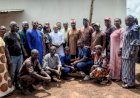
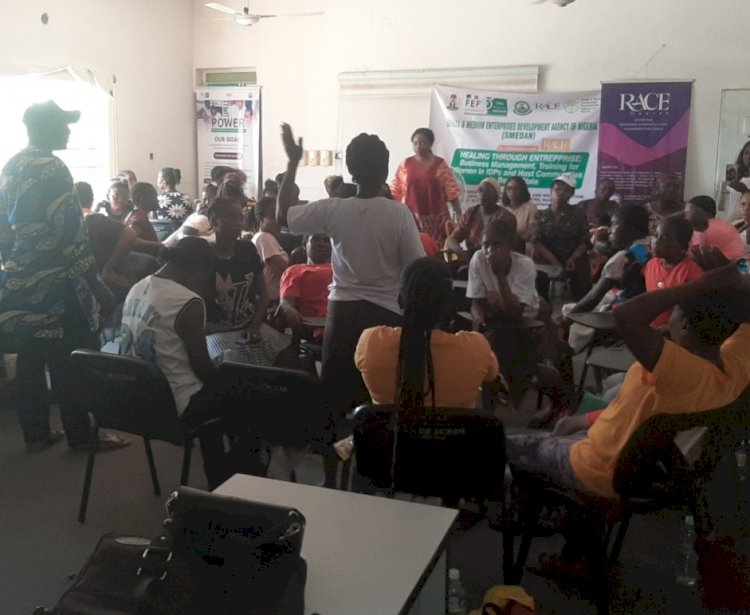
The programme, Healing Through Enterprise: Business Management Training for Women GBV Survivors in IDP and Host Communities, was formally launched in Makurdi, the state capital, with stakeholders celebrating the empowerment of vulnerable women.
In her keynote address, Evelyn Terundu Ugbe, Executive Director of the Centre for Redefining Alternative Civic Engagement for Africa, described the project as “a pathway to healing, hope and transformation for vulnerable women.” She emphasized that the initiative coincides with the 16 Days of Activism Against Gender-Based Violence, noting that many women in conflict-affected communities continue to carry “invisible scars” that hinder their ability to rebuild their lives.
“We have equipped numerous women with valuable vocational and business management skills, empowering them to take charge of their economic futures,” Ugbe said. She highlighted the creation of the TAHAV Women Cooperative Society as one of the programme’s biggest achievements, adding, “Several women have successfully launched their enterprises and participated in exhibitions, showcasing their talents and products.”
Ugbe revealed that the women had collectively recorded sales exceeding N250,000, describing it as “a testament to their resilience and potential.” She further urged stronger collaboration with public agencies to create enabling business environments for the women.
“As we celebrate these achievements, I make a heartfelt appeal for partnership with government agencies. By streamlining processes and offering resources, these women can thrive and contribute meaningfully to rebuilding their communities,” she said.
She also stressed that women in IDP settings remain “critical agents for rebuilding their neighbourhoods and futures,” and called for technology to be leveraged “as a tool for empowerment, not a weapon that harms women.” Ugbe commended SEMDAN, GERI, and other partners for their support and expressed appreciation to the Embassy of France in Nigeria for funding the programme. “Healing isn’t just about recovery; it’s about reclaiming hope and rebuilding lives,” she concluded.
Speaking to journalists, Miss Stephanie Tamang, Assistant Executive Director of the Gender and Environmental Risk Reduction Initiative (GERI), which implemented the programme under the POWER Project (Promoting Women’s Economic Resilience in Conflict-Affected Communities), said the training is part of a broader effort to empower women in conflict-affected communities.
“What is taking place here is a small part of a bigger project. We are empowering 50 women, 40 from IDP camps and 10 from host communities in Daudu, to ensure everyone is well represented,” Tamang said. She explained that the programme equips women with vocational, economic, and financial management skills to ensure long-term sustainability.
“If you give them money, once it finishes, that’s all. But when you empower them, they can use what you’ve learned to grow their businesses and empower others,” she explained. She also outlined the programme’s focus on business skills, saying, “We want them to know what it takes to run a business, what it takes to legalize their business. It's called Healing Through Vocational Training.”
Tamang noted that an initial needs assessment helped select participants, with priority given to GBV survivors and female heads of households. “Many of these women have lost their husbands or fathers. It was important that they were represented,” she said. She added that GERI collaborated with institutions including the State Emergency Management Agency (SEMA), traditional rulers, Ministry of Women Affairs, Ministry of Trade and Investment, Ministry of Humanitarian Affairs and Disaster Management, and SMEDAN to ensure a transparent selection process.
During the training, representatives from NAFDAC, the Corporate Affairs Commission (CAC), and SMEDAN guided participants on formalizing and growing their businesses. Wange Akange of NAFDAC advised beneficiaries to register their products to ensure quality and compliance, while Simon Ayangeor of CAC encouraged the registration of business names to support growth. John Adah of SMEDAN assured participants that their involvement qualifies them for future government support schemes.
Beneficiaries also expressed gratitude for the programme. Nguhiden Ugbe from Daudu, who trained in catering and baking, said the programme strengthened her skills and shifted her mindset. Miss Dorcas Shaaho from Daudu IDP Camp 2, trained as a tailor, said, “The way they taught me, I can sew clothes and bags. This December, I will sew children’s clothes and take them to the market to make money.” She added, “Now I can send money to my younger sister in school and give my mother money to buy food,” thanking the French Embassy and GERI for their support.
The initiative represents a significant step in empowering vulnerable women in Benue State, providing them not only with skills but also with the confidence and support to rebuild their lives and contribute meaningfully to their communities.