Presidency replies Atiku, defends Tinubu's economic reforms, rejects recklessness claims
 admin
Aug 2, 2026 10:19
6
0
admin
Aug 2, 2026 10:19
6
0
By James Ike
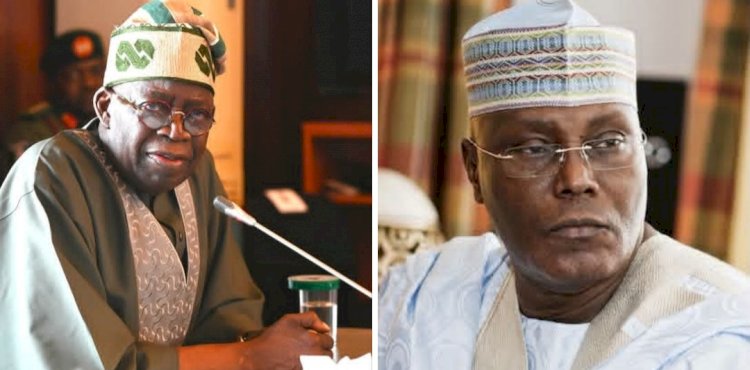
he Presidency has dismissed allegations by former Vice President Atiku Abubakar that President Bola Tinubu's administration is fiscally reckless, insisting that the government's economic reforms are yielding positive results despite initial hardships.
In a statement on Sunday, the Special Adviser to the President on Information and Strategy, Bayo Onanuga, said Atiku's criticisms were based on outdated data from the 2024 fiscal year and failed to reflect Nigeria's current economic realities in 2026.
Onanuga argued that the economy has made significant progress since the implementation of key reforms, including the removal of fuel subsidy and the unification of the foreign exchange market.
According to him, Nigeria's dollar-denominated Gross Domestic Product (GDP) has risen from about $253 billion after the exchange rate adjustment to approximately $377 billion, while the naira GDP has grown from about ₦314 trillion to ₦530 trillion.
Responding to concerns over the country's rising debt profile, the presidential aide maintained that Nigeria's debt remained sustainable, noting that the country's debt-to-GDP ratio was about 40 per cent, which he said was lower than that of several African and developed economies.
He also stated that the debt service-to-revenue ratio had dropped from nearly 100 per cent in December 2022 to below 60 per cent under the current administration.
The Presidency also defended the removal of fuel subsidy, describing it as a necessary reform that has significantly increased revenues accruing to states and local governments through the Federation Account Allocation Committee (FAAC).
According to Onanuga, the additional funds have enabled subnational governments to invest more in infrastructure, healthcare, education and social programmes.
On the administration's tax reforms, Onanuga rejected claims that the government was imposing heavier taxes on Nigerians, explaining that the reforms were designed to reduce the tax burden on low-income earners and small businesses while improving compliance among high-income individuals and profitable companies.
Highlighting achievements in the health sector, the Presidency said more than 3,000 primary healthcare centres had been upgraded while over 78,000 frontline health workers had been retrained in the last three years.
It also noted that over 100 public health facilities now provide free caesarean sections for indigent mothers and that three world-class cancer centres had become operational.
In the education sector, the statement said over 11,000 projects had been executed through the Universal Basic Education Commission (UBEC), while the Nigerian Education Loan Fund (NELFUND) had provided loans worth over ₦303 billion to more than 1.64 million students across 300 higher institutions.
Onanuga further dismissed Atiku's claim of a ₦7.98 trillion oil revenue windfall, describing it as inaccurate. He explained that while crude oil prices had exceeded budget benchmarks, lower-than-expected production and existing crude-backed loan obligations had offset potential gains.
The Presidency acknowledged that the reforms had imposed short-term hardships but insisted they were necessary to address longstanding structural distortions in the economy.
It also pointed to the implementation of the NG-CARES, HOPE and SOLID programmes, alongside cash transfers to 15 million vulnerable households, as measures aimed at cushioning the impact of the reforms.
The statement concluded that while Nigeria still faced economic challenges, the Tinubu administration remained committed to pursuing reforms that would strengthen public finances, expand economic opportunities and improve the standard of living of Nigerians.
It urged critics to assess the government's policies based on measurable outcomes rather than what it described as outdated narratives.