
ICPC Boss seeks tech-driven anti-corruption fight, says old methods can't defeat digital graft
 admin
Jul 17, 2026 10:20
20
0
admin
Jul 17, 2026 10:20
20
0
By Johnson Arua
Chairman of the Independent Corrupt Practices and Other Related Offences Commission (ICPC), Dr. Musa Adamu Aliyu, SAN, has called for innovative and technology-driven strategies to combat corruption, warning that Nigeria cannot tackle modern-day corruption with outdated approaches.
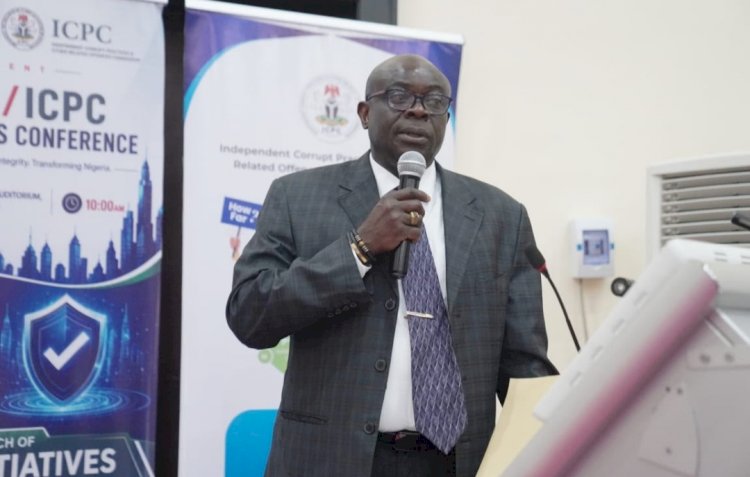
Speaking at the Institute for Ethics and Professional Studies (IFEPS)/ICPC Stakeholders Conference held at the Commission's headquarters in Abuja, Dr. Aliyu said corruption has become increasingly digital, sophisticated and fast-paced, requiring anti-corruption agencies and stakeholders to adopt smarter and more effective methods.
The conference, themed "Securing Tomorrow: Ethics at the Frontier of Innovation," brought together policymakers, educators, civil society organisations, private sector leaders and development partners to promote ethics, transparency and accountability as critical drivers of national development.
Represented by the Secretary to the Commission, Mr. Clifford Okwudili Oparaodu, DSSRS, the ICPC chairman said the country's ethical standards must evolve alongside technological advancement.
"Our theme speaks directly to the challenge before us. Corruption is evolving. It is now digital, faster and more sophisticated. If our ethics do not evolve with it, we will be left behind. We cannot fight 21st century corruption with 20th century tools," he said.
Aliyu unveiled three major initiatives aimed at strengthening integrity across the country. They include the C-H-I-L-D-R-E-N Values Initiative to instill honesty, discipline and respect in children, the Citizens Digital Responsibility Initiative (CDRI) to promote ethical online conduct and combat cybercrime and misinformation, and the newly launched Ethics Endowment Fund (EEF) to provide sustainable funding for ethics education and public enlightenment.
He maintained that while investigation and prosecution remain central to the Commission's mandate, enforcement alone cannot eliminate corruption.
According to him, Nigeria must build a culture where integrity becomes the accepted standard of behaviour, noting that the ICPC has already introduced initiatives such as the National Values Curriculum, the National Ethics and Integrity Policy and the Sexual Harassment Policy to strengthen ethical governance.
Earlier, Executive Director of IFEPS, Dr. (Mrs.) Uyim Akpabio, said the conference was convened at a time when technological innovation is advancing faster than regulatory frameworks, making it imperative to place ethics at the centre of governance and development.
She said the conference was designed around the principles of Alignment, Action and Activation, urging governments, educational institutions, civil society organisations, faith-based groups, the media and families to work together in promoting ethical values among young Nigerians.
Also speaking, Chairperson of the IFEPS Board, Prof. Ekanem Braide, represented by Ambassador Anthonia Ekpa, warned that innovation without integrity could deepen inequality, encourage misinformation and erode public trust.
She disclosed that the conference featured the joint launch of three flagship initiatives by IFEPS and ICPC aimed at institutionalising ethics, integrity and responsible digital citizenship.
Representatives of the Federal Road Safety Corps and the Bureau of Public Procurement also pledged continued collaboration in promoting transparency and accountability, stressing that technology can only deliver sustainable development when guided by ethical values and responsible leadership.